
When choosing a cellular connection for your business, IoT hardware, or rural home, the most critical decision is whether to use a standard single-network SIM or invest in a multi-network roaming SIM. Understanding the difference between a Multi-Network SIM vs Standard SIM is the key to preventing costly downtime.

What is a Standard SIM?
A standard SIM is what you likely have in your personal smartphone. It is tied to a single, specific network provider (e.g., EE, O2, Vodafone, or Three).
Pros:
- Generally cheaper for high-data consumer usage.
- Good if you live in an urban area with perfect coverage from that specific provider.
Cons:
- The Single Point of Failure: If that specific network’s mast goes down for maintenance, or if you travel to a rural “blackspot” where they have no coverage, you have zero signal. Your device is offline.
What is a Multi-Network SIM?
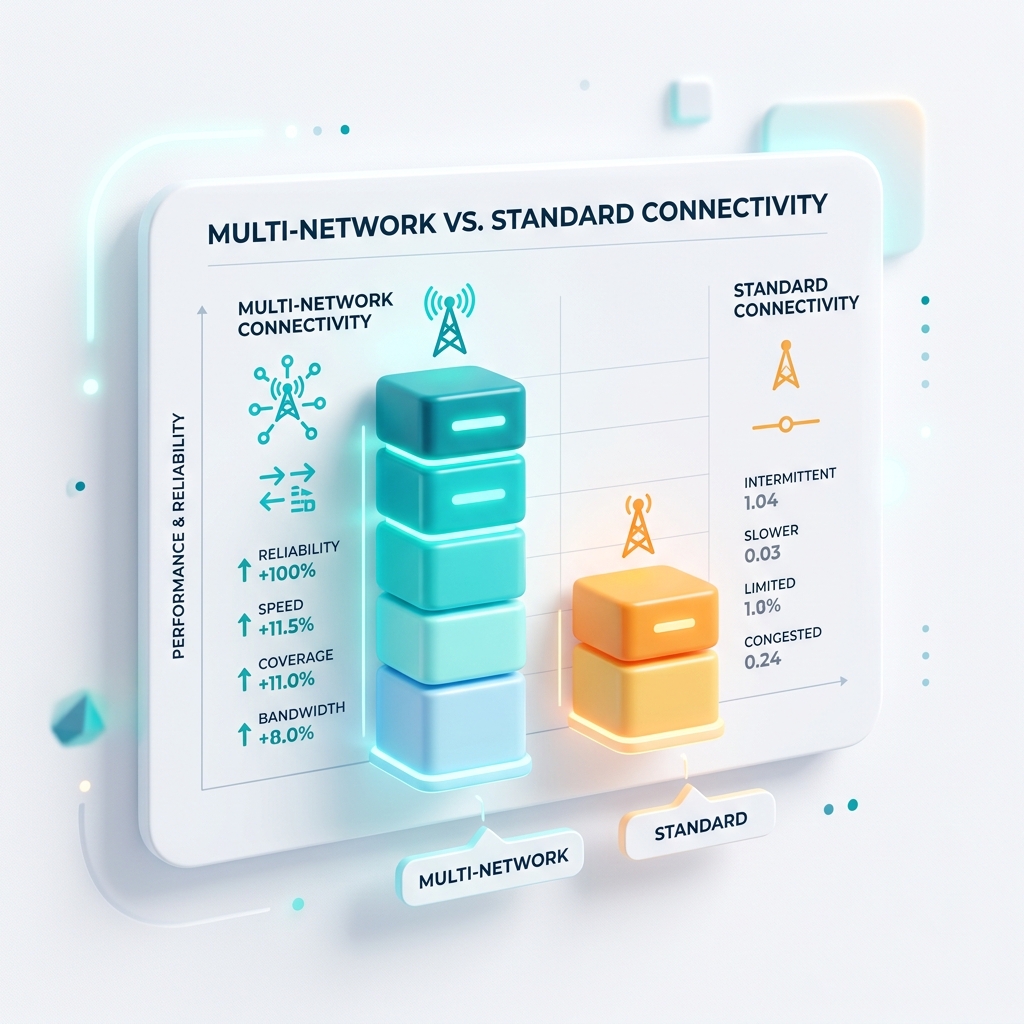
A multi-network SIM (often called a roaming or un-steered SIM) is not tied to any single provider. Instead, it has commercial agreements to use the infrastructure of multiple different networks. Anywhere SIM, for example, utilizes all major UK networks.
The “Un-steered” Difference
Not all multi-network SIMs are created equal. Many cheap roaming SIMs are “steered.” This means the provider programs the SIM to prefer the cheapest network, forcing your device to stay on a weak 1-bar signal even if a competitor’s mast is offering a 5-bar signal right next to you.
Anywhere SIM provides un-steered multi-network SIMs.
Pros of Un-steered Multi-Network:
- 100% Signal Optimization: The SIM ignores commercial preference and actively scans for the absolute strongest signal available.
- Automatic Failover: If the EE network drops, the SIM seamlessly jumps to O2 or Vodafone within seconds, keeping your device online.
- Zero “Not-Spots”: By combining the coverage maps of every major provider, you effectively eliminate rural dead zones.
Cons:
- Slightly higher cost per GB compared to consumer SIMs (due to roaming agreements), but the ROI on uptime makes it essential for business and IoT.
The Verdict
If you are using a SIM for mission-critical hardware—CCTV, alarm systems, card payment terminals, or remote monitoring—a standard SIM is a false economy. The cost of a single hour of downtime far exceeds the investment in a robust, un-steered multi-network SIM.